
Brain Computer Interface Market Analysis 2025 | Trends, Growth, Opportunities & Regional Insights
Explore the latest insights on the Brain Computer Interface Market, including key trends, market dynamics, top report findings, challenges, opportunities, and regional analysis for North America, Europe, Asia Pacific, Latin America, and the Middle East & Africa. Discover how BCIs are transforming healthcare, gaming, and more.
 Coralia Joe
Brain Computer Interface Market: Unlocking the Future of Human-Machine Interaction
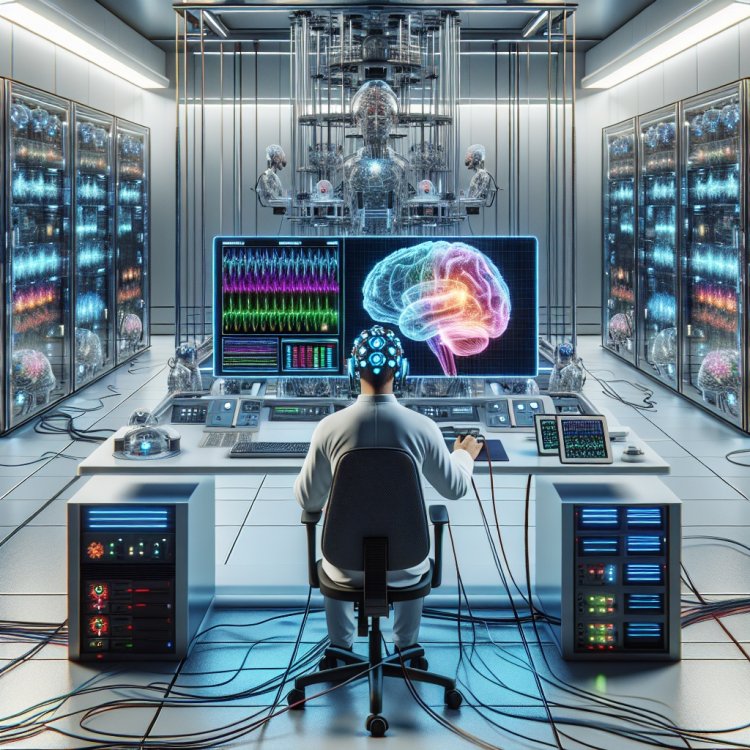
A Brain Computer Interface (BCI), also known as a brain-machine interface (BMI), is a technology that enables direct communication between the human brain and external devices. BCIs work by detecting and interpreting electrical signals generated by the brain, typically using sensors placed on the scalp (non-invasive) or implanted within the brain (invasive). These signals are then translated into commands that can control computers, prosthetic limbs, wheelchairs, or other electronic devices.
The primary goal of a BCI is to bypass the body’s normal output pathways of nerves and muscles, allowing individuals—especially those with severe physical disabilities—to interact with and control their environment. BCIs are used in various applications, including medical rehabilitation, assistive communication for people with neurological disorders, gaming, and even research into cognitive neuroscience. a Brain Computer Interface is a groundbreaking technology that connects the brain directly to external systems, enabling new forms of communication and control that were previously impossible.
Overview of Brain Computer Interface Market
The Brain Computer Interface (BCI) market is rapidly emerging as a transformative force in the realm of human-machine interaction. BCIs are systems that enable direct communication between the human brain and external devices, bypassing traditional neuromuscular pathways. This technology is revolutionizing sectors such as healthcare, gaming, communication, and defense by offering new ways to restore lost functions, enhance cognitive abilities, and create immersive experiences. The primary driving factors behind the growth of the BCI market include the rising prevalence of neurological disorders, increasing investments in neurotechnology research, and the growing demand for advanced assistive technologies. Additionally, the integration of artificial intelligence and machine learning with BCI systems is further propelling market expansion, making BCIs more accurate, responsive, and accessible.
Get a Sample Copy:- https://www.vantagemarketresearch.com/brain-computer-interface-market-2381/request-sample
Top Key Player
- Natus Medical Inc. (U.S.)
- G.TEC Medical Engineering GmbH (Austria)
- Medtronic PLC (Ireland)
- Compumedics Neuroscan (Australia)
- Brain Products GmbH (Germany)
- Integra Lifesciences Corporation (U.S.)
- Advanced Brain Monitoring Inc. (U.S.)
- EMOTIV (U.S.)
- NeuroSky (U.S.)
- Interaxon Inc. (Canada)
- ANT Neuro (Netherlands)
- Neuroelectrics (Spain)
- Ripple Neuro (U.S.)
- NIRx Medical Technologies LLC (U.S.)
- Open BCI (U.S.)
- CGX (Canada)
Market Dynamics
The dynamics of the Brain Computer Interface market are shaped by a complex interplay of technological advancements, regulatory frameworks, and evolving end-user needs. On the one hand, rapid progress in neuroimaging, signal processing, and wireless communication technologies is enabling the development of more sophisticated and user-friendly BCI devices. These innovations are making BCIs more practical for real-world applications, from controlling prosthetic limbs to enabling communication for individuals with severe disabilities. On the other hand, the market is influenced by regulatory challenges, particularly concerning data privacy, safety, and ethical considerations. Governments and regulatory bodies are increasingly scrutinizing BCI technologies to ensure they meet stringent safety standards and protect user data. Furthermore, the market is witnessing a surge in collaborations between academic institutions, technology companies, and healthcare providers, which is accelerating the pace of innovation and commercialization. However, high development costs and the need for specialized expertise remain significant barriers to widespread adoption. Overall, the BCI market is characterized by rapid innovation, increasing investment, and a growing focus on user-centric design and ethical considerations.
Key Segmentation
By Product
- Invasive BCI
- Partially Invasive BCI
- Non-invasive BCI
By Application
- Healthcare
- Disabilities Restoration
- Brain Function Repair
- Smart Home Control
- Communication & Control
- Entertainment & Gaming
By End Use
- Medical (48.5%)
- Military (21.5%)
- Other End Uses (30.0%)
Top Trends in the Brain Computer Interface Market
One of the most prominent trends in the Brain Computer Interface market is the integration of artificial intelligence and machine learning algorithms to enhance signal processing and interpretation. This trend is enabling BCIs to deliver more accurate and reliable outputs, even in noisy or complex environments. Another key trend is the miniaturization and wireless connectivity of BCI devices, which is making them more portable and convenient for everyday use. Wearable BCIs, such as EEG headsets and neurofeedback devices, are gaining popularity among consumers for applications ranging from mental wellness to gaming. The healthcare sector continues to be a major driver of BCI adoption, with applications in neurorehabilitation, assistive communication, and brain-controlled prosthetics. Additionally, the gaming and entertainment industries are exploring BCIs to create immersive and interactive experiences that respond to users' thoughts and emotions. There is also a growing interest in non-invasive BCIs, which offer a safer and more user-friendly alternative to invasive systems. Finally, the market is witnessing increased investment in research and development, with both established tech giants and startups vying to develop the next generation of BCI technologies.
Top Report Findings
- The global Brain Computer Interface market is projected to grow at a robust CAGR over the next decade, driven by technological advancements and increasing demand for assistive devices.
- Non-invasive BCIs dominate the market due to their safety and ease of use, but invasive BCIs are gaining traction in clinical applications.
- Healthcare remains the largest application segment, followed by gaming, communication, and defense.
- North America holds the largest market share, attributed to strong research infrastructure and high healthcare spending.
- Asia Pacific is expected to witness the fastest growth, fueled by rising investments in neurotechnology and expanding healthcare access.
- Key players in the market are focusing on strategic partnerships, mergers, and acquisitions to strengthen their product portfolios.
- Ethical and regulatory concerns are prompting the development of new standards and guidelines for BCI technologies.
- The integration of AI and cloud computing is enhancing the capabilities and scalability of BCI systems.
Challenges in the Brain Computer Interface Market
Despite its immense potential, the Brain Computer Interface market faces several significant challenges. One of the primary obstacles is the complexity of accurately interpreting brain signals, which can be highly variable and susceptible to interference from external factors. This makes it difficult to develop BCIs that are both reliable and user-friendly. Additionally, the high cost of research, development, and commercialization poses a barrier to entry for many organizations, particularly startups and smaller companies. Regulatory hurdles, including stringent safety and data privacy requirements, further complicate the market landscape. Ethical concerns, such as the potential for misuse of neurodata and the implications of direct brain manipulation, are also gaining attention from policymakers and the public. Moreover, there is a lack of standardized protocols and interoperability among different BCI systems, which hampers widespread adoption and integration. Addressing these challenges will require concerted efforts from industry stakeholders, regulators, and the research community.
Opportunities in the Brain Computer Interface Market
Amidst the challenges, the Brain Computer Interface market presents a wealth of opportunities for innovation and growth. The increasing prevalence of neurological disorders, such as stroke, ALS, and spinal cord injuries, is driving demand for advanced assistive technologies that can restore lost functions and improve quality of life. The growing adoption of BCIs in non-medical applications, such as gaming, education, and smart home control, is expanding the market's reach and creating new revenue streams. Advances in AI, machine learning, and cloud computing are enabling the development of more powerful and scalable BCI systems, opening up possibilities for personalized neurofeedback, cognitive enhancement, and brain-controlled devices. Strategic collaborations between technology companies, healthcare providers, and academic institutions are accelerating the pace of innovation and commercialization. Furthermore, the emergence of open-source BCI platforms and standardized protocols is fostering greater interoperability and reducing barriers to entry. As public awareness and acceptance of BCIs continue to grow, the market is poised for significant expansion in the coming years.
Key Questions Answered in the Brain Computer Interface Market Report
- What is the current size and projected growth rate of the global Brain Computer Interface market?
- What are the key driving factors and restraints influencing market growth?
- Which application segments are expected to witness the highest growth in the coming years?
- Who are the leading players in the BCI market, and what are their strategies?
- What are the latest technological advancements and trends shaping the market?
- How are regulatory and ethical considerations impacting the development and adoption of BCIs?
- What are the major challenges faced by market participants, and how can they be addressed?
- How does the competitive landscape vary across different regions?
Regional Analysis
The Brain Computer Interface market exhibits distinct regional dynamics, shaped by varying levels of technological advancement, healthcare infrastructure, and regulatory environments. In North America, the market is driven by robust research and development activities, high healthcare spending, and a strong presence of leading technology companies. The United States, in particular, is at the forefront of BCI innovation, with numerous academic institutions, startups, and established firms actively developing and commercializing cutting-edge BCI solutions. Europe follows closely, with significant investments in neurotechnology research and a supportive regulatory framework that encourages innovation while prioritizing safety and ethical considerations. Countries such as Germany, the UK, and France are leading the charge in both clinical and non-clinical BCI applications.
The Asia Pacific region is poised for rapid growth, fueled by increasing investments in healthcare infrastructure, rising awareness of neurological disorders, and expanding access to advanced medical technologies. China, Japan, and South Korea are emerging as key players in the BCI market, with government initiatives and private sector investments driving research and commercialization efforts. Latin America is gradually gaining traction, with Brazil and Mexico leading the way in adopting BCI technologies for healthcare and rehabilitation. However, limited access to advanced healthcare and lower levels of investment remain challenges in the region. The Middle East & Africa region is still in the nascent stages of BCI adoption, but growing investments in healthcare and technology, particularly in the Gulf Cooperation Council (GCC) countries, are expected to drive future growth. Overall, while North America and Europe currently dominate the market, Asia Pacific is expected to emerge as the fastest-growing region, driven by favorable demographics, rising healthcare needs, and increasing technological adoption.
The Brain Computer Interface market is on the cusp of a technological revolution, with the potential to transform the way humans interact with machines and the world around them. Driven by advances in neuroscience, artificial intelligence, and wearable technology, BCIs are opening up new possibilities for healthcare, communication, entertainment, and beyond. While the market faces significant challenges, including technical, regulatory, and ethical hurdles, the opportunities for innovation and growth are immense. As research and development efforts continue to accelerate and public awareness grows, the BCI market is set to play a pivotal role in shaping the future of human-machine interaction.