
Global Shipbuilding Market Industry Growth, Trends & Forecast 2023 - 2032
The global shipbuilding market, valued at USD 150.5 billion in 2023, is projected to grow to USD 205 billion by 2032, expanding at a compound annual growth rate (CAGR) of 3.5%. Explore key trends, drivers, and forecasts shaping the industry's future.
 Coralia Joe
Global Shipbuilding Market Poised for Robust Growth: Projected to Reach USD 205 Billion by 2032
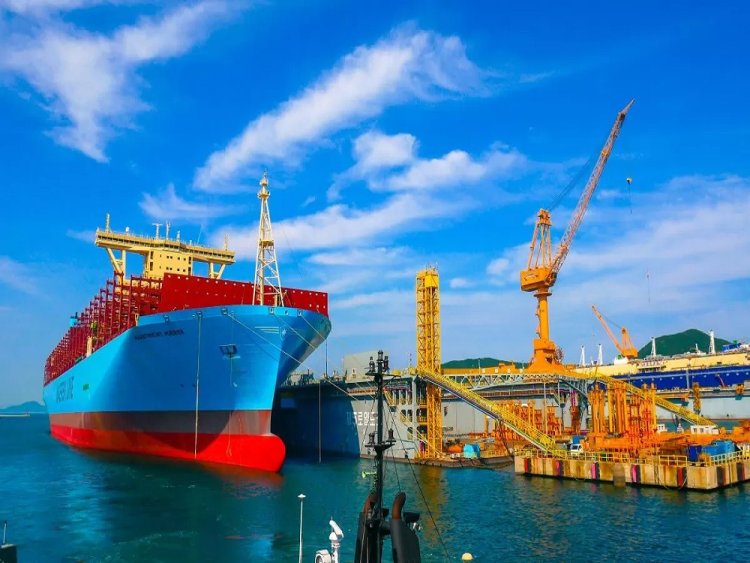
The global Shipbuilding Market plays a pivotal role in the world economy, encompassing the design, construction, repair, and maintenance of vessels used for commercial, defense, offshore, and passenger transport purposes. Driven by the increasing demand for maritime transportation and trade, the industry has witnessed significant technological advancements, including automation, digitalization, and eco-friendly vessel designs. Key players are investing in research and development to improve vessel efficiency, reduce carbon emissions, and meet stringent environmental regulations. The market is highly dynamic, influenced by global trade patterns, geopolitical factors, and rising defense expenditures, positioning shipbuilding as a critical sector for both economic growth and national security worldwide.
Our comprehensive Shipbuilding Market report is ready with the latest trends, growth opportunities, and strategic analysis. View Sample Report PDF.
Key Takeaways
- Market Size & Forecast: The global Shipbuilding Market was valued at approximately USD 150.5 billion in 2023 and is projected to reach USD 205 billion by 2032, growing at a CAGR of 3.5% from 2024 to 2032.
- Segmentation Insights: The market is categorized based on vessel type, application, and region, with bulk carriers leading in revenue share.
- Asia Pacific dominates the market, with significant contributions from China and South Korea.
- Key drivers include increasing global trade, technological advancements, and environmental regulations.
- In 2025, HD Hyundai Heavy Industries is in talks to acquire a U.S. shipyard, aiming to enhance its presence in the U.S. naval shipbuilding sector.
Premium Insights
The Shipbuilding Market encompasses the design, construction, and maintenance of ships and other floating vessels. This industry plays a crucial role in global trade, defense, and transportation sectors. Advancements in technology and materials, along with increasing demand for sustainable and efficient vessels, are driving the market's growth.
The global Shipbuilding Market is undergoing significant transformation, driven by technological innovation, sustainability trends, and evolving industry requirements. Automation and digitalization are enhancing ship design, construction efficiency, and operational performance, while the adoption of advanced materials improves durability and reduces vessel weight. Sustainability is a major focus, with eco-friendly vessels and low-emission technologies gaining prominence to comply with stringent international environmental regulations. Additionally, rising demand for naval and defense vessels, particularly in Asia Pacific and North America, reflects geopolitical priorities. The market also sees increased investments in specialized vessels for offshore oil and gas, passenger transport, and commercial shipping, underscoring the sector’s diversification and growth potential.
Market Size & Forecast
- 2023: USD 150.5 billion
- 2032: USD 205 billion
- CAGR (2024–2032): 3.5%
The market's expansion is attributed to the increasing need for maritime vessels in global trade and defense sectors. the Shipbuilding Market is characterized by a mix of large multinational corporations and regional players. Key companies are focusing on technological innovations and strategic partnerships to enhance their market position. The industry is witnessing consolidation, with mergers and acquisitions aimed at expanding capabilities and market reach.
For Shipbuilding Market Research Report and updates detailed: View Full Report Now!
Type Insights
The Shipbuilding Market is segmented into bulk carriers, tankers, container ships, naval vessels, and specialized vessels. Bulk carriers dominate due to their critical role in transporting dry commodities such as coal, ores, and grains. Tankers support liquid cargo transport, including crude oil and LNG, while container ships facilitate global trade of manufactured goods. Naval vessels cater to defense requirements, and specialized vessels, such as offshore support ships and icebreakers, serve niche industrial and research purposes, reflecting the diverse operational scope of the industry.
End Use Insights
The market is classified into commercial enterprises, government & defense, energy sector, tourism industry, and fisheries. Commercial shipping drives bulk and container vessel demand, while governments procure naval vessels for national security. The energy sector relies on specialized vessels for offshore oil and gas operations. Tourism fuels demand for cruise ships and ferries, and fisheries require fishing vessels and support ships. End-use segmentation highlights the varied applications and tailored technological requirements across sectors, shaping production strategies and market growth.
Regional Insights
North America Shipbuilding Market
North America’s shipbuilding market is largely driven by defense and naval vessel demand, with the U.S. investing heavily in modernizing its fleet. The region emphasizes technological advancements and automation in ship construction to enhance efficiency. Government initiatives to revitalize domestic shipyards, coupled with strategic partnerships, are shaping market growth. While commercial shipbuilding is smaller compared to Asia, there is steady demand for specialized vessels for offshore oil and gas, research, and passenger transport.
Europe Shipbuilding Market
Europe focuses on luxury vessels, cruise ships, and specialized industrial ships. Key players in Germany, Italy, and the Netherlands lead in innovation, emphasizing sustainability and low-emission technologies. The market benefits from a mature maritime infrastructure and skilled workforce. Environmental regulations push for eco-friendly vessel designs, while tourism and defense requirements support growth in passenger and naval ship segments. Strategic collaborations and modernization of shipyards are central to maintaining competitiveness.
Asia Pacific Shipbuilding Market
Asia Pacific dominates the global shipbuilding market, with China, South Korea, and Japan as major players. The region leads in commercial and naval ship production, driven by strong export capabilities and cost-efficient manufacturing. Technological advancements, including digitalization and automation, are widely adopted. Government support, increasing global trade, and defense expansion further fuel growth. Asia Pacific also invests in eco-friendly vessels to meet international emission standards, reinforcing its dominance in the global shipbuilding landscape.
Latin America Shipbuilding Market
Latin America is an emerging market, with Brazil and Mexico contributing to growth through offshore oil and gas vessel demand. Investments in shipbuilding infrastructure are increasing, although the market faces challenges such as limited skilled labor and funding constraints. The region sees opportunities in commercial shipping, defense, and specialized vessels, supported by expanding maritime trade and industrial activity. Market expansion is expected as governments focus on strengthening domestic shipbuilding capabilities.
Middle East & Africa Shipbuilding Market
The Middle East & Africa region is witnessing growth due to naval and commercial vessel investments, driven by oil-rich nations enhancing maritime security and trade capabilities. Countries like Saudi Arabia, UAE, and Egypt are investing in shipyards and technology upgrades. The market emphasizes offshore support vessels for oil and gas operations, alongside commercial shipping and passenger transport. Increasing defense budgets and regional trade expansion are key factors influencing the shipbuilding industry in this region.
Key Shipbuilding Companies
- Sumitomo Heavy Industries Ltd.
- Korea Shipbuilding & Offshore Engineering Co. Ltd. (Hyundai Heavy Industries Co. Ltd.)
- Bae Systems PLC
- Huntington Ingalls Industries Inc.
- Fincantieri Group
- Mitsubishi Heavy Industries Ltd
- Samsung Heavy Industries Co. Ltd.
- Oshima Shipbuilding Co. Ltd.
- General Dynamics Corp.
- Damen Shipyards Group
These companies are at the forefront of technological advancements and market expansion in the shipbuilding industry.
Recent Developments
- In 2025, HD Hyundai Heavy Industries is in discussions to acquire a U.S. shipyard, aiming to bolster its presence in the U.S. naval shipbuilding sector. This move aligns with the U.S. government's initiative to revitalize its shipbuilding industry and enhance naval capabilities.
Shipbuilding Market Report Scope
The global Shipbuilding Market report provides a comprehensive analysis of historical trends, current market dynamics, and future growth projections from 2024 to 2032. It covers market segmentation by vessel type, application, end-use, and region, offering detailed insights into each segment’s contribution and growth potential. The report examines key players, competitive landscape, technological advancements, and strategic initiatives, along with macroeconomic and industry-specific factors influencing market expansion. Geographical coverage includes North America, Europe, Asia Pacific, Latin America, and Middle East & Africa, providing a holistic view of the global shipbuilding landscape and investment opportunities.
Market Dynamics
Driver
The primary driver of the global Shipbuilding Market is the growing demand for maritime transportation and global trade, which necessitates the construction of new vessels and modernization of existing fleets. Additionally, rising defense budgets and naval expansion programs in Asia Pacific and North America are boosting demand for military vessels. Technological advancements such as automation, digitalization, and eco-friendly materials further propel market growth by improving vessel efficiency, reducing operational costs, and meeting stringent environmental regulations.
Restraint:
The market faces significant restraints, including high capital investment requirements and long project lead times, which can limit smaller shipbuilders’ participation. Strict environmental regulations and compliance mandates add further operational challenges. Additionally, fluctuations in raw material costs, particularly steel, and geopolitical tensions affecting global trade routes can disrupt production schedules and supply chains, impacting overall market growth.
Opportunity:
There are considerable opportunities in the market through innovation in green and sustainable ship technologies, including LNG-powered vessels, hybrid propulsion systems, and low-emission designs. The growing offshore oil and gas industry, expanding cruise and ferry segments, and rising demand for specialized vessels offer avenues for market expansion. Emerging markets, especially in Latin America and the Middle East, present untapped potential for both commercial and naval shipbuilding projects.
Challenge:
The industry faces challenges such as skilled labor shortages, increasing competition, and geopolitical uncertainties. Maintaining high-quality standards while meeting tight delivery schedules can be difficult, especially with complex vessel designs. Supply chain disruptions and rising raw material costs add additional pressure, requiring shipbuilders to adopt innovative strategies and resilient operations to sustain growth in a highly competitive and evolving market.
Market Segmentation
- By Type: Bulk Carriers, Oil Tankers, Container Ships, Naval Vessels, Specialized Vessels
- By End-Use: Transport, Military
- By Region: North America, Europe, Asia Pacific, Latin America, Middle East & Africa
Frequently Asked Questions
Q.1 What is the projected growth rate of the global Shipbuilding Market?
- The market is expected to grow at a CAGR of 3.5% from 2024 to 2032, driven by increasing global trade and rising demand for naval and commercial vessels.
Q.2 Which region dominates the Shipbuilding Market?
- Asia Pacific leads the global shipbuilding market, with China and South Korea as major contributors due to high production capacity, technological advancements, and strategic investments in vessel manufacturing.
Q.3 What are the key applications driving market growth?
- The primary applications include commercial shipping, defense, offshore oil & gas, passenger transport, and fishing industry, catering to diverse global maritime needs.
Q.4 Who are the major companies operating in the Shipbuilding Market?
- Key players include Hyundai Heavy Industries, Samsung Heavy Industries, Daewoo Shipbuilding & Marine Engineering, China State Shipbuilding Corporation, and Fincantieri, leading in technological innovation and global market share.
Q.5 What are the major recent developments in the Shipbuilding Market?
- In 2025, HD Hyundai Heavy Industries announced plans to acquire a U.S. shipyard to strengthen its presence in naval shipbuilding, aligning with the U.S. initiative to revitalize domestic shipbuilding capabilities.
Q.6 What are the key drivers influencing market growth?
- Growth is primarily driven by the increase in global trade, rising demand for efficient cargo transport, expansion of naval fleets, and advancements in shipbuilding technology.
Q.7 What challenges does the Shipbuilding Market face?
- Challenges include high capital investment, stringent environmental regulations, skilled labor shortages, and geopolitical tensions, which may disrupt production and supply chains.
Q.8 What opportunities exist in the Shipbuilding Market?
- Opportunities are seen in automation, digitalization, energy-efficient and eco-friendly vessel technologies, and emerging markets seeking specialized ships.
Q.9 Which vessel type holds the largest market share?
- Bulk carriers dominate the market due to their essential role in transporting dry commodities such as grains, coal, ores, and cement globally.
Q.10 How is the market segmented?
- The market is segmented by vessel type, application, end-use, and region, providing a detailed understanding of industry dynamics and growth prospects.